









A Walk against Ethnocentrism
By Ishimwe Jonan
The Saturday morning of 9th March, 2024, was a cool, drizzly morning in the Kigezi sub-region of Uganda. The clouds grew a little darker and it began to rain around midday.
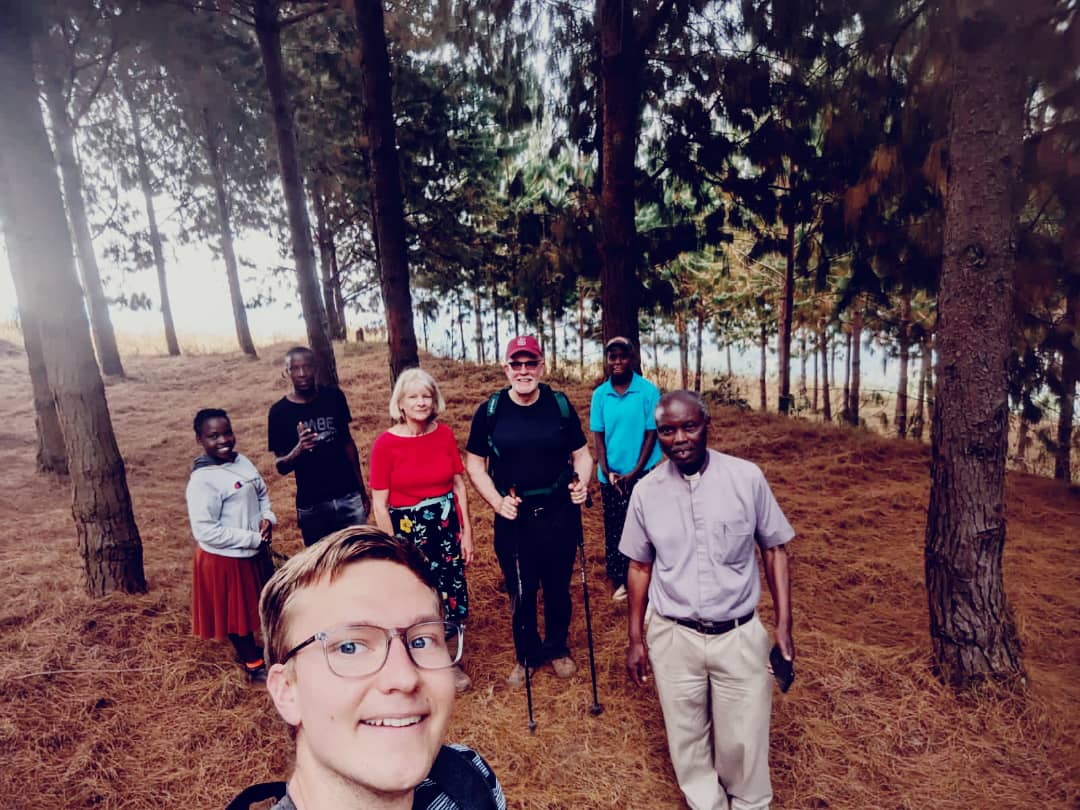
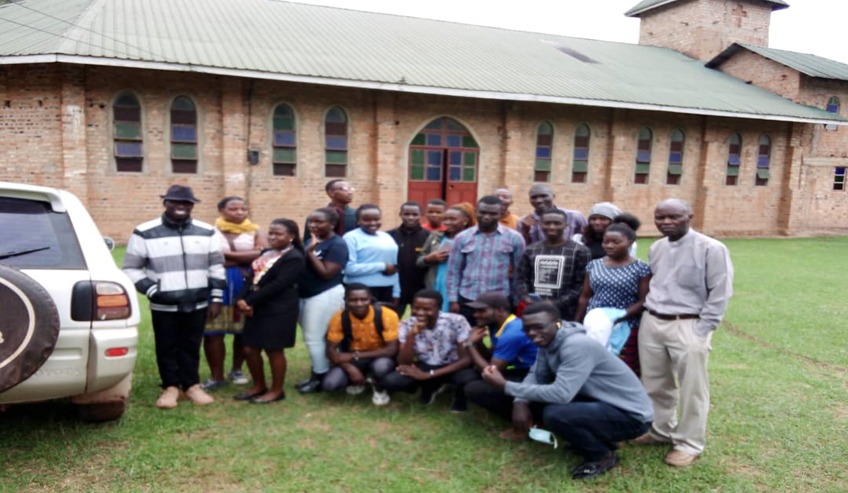
A score of Kabale University students gathered near the Academic Registrar’s office to commence on a trip that would end at the Nyakagyera cave. Their chief tour guide was Rev. Prof. Manuel John Kamugisha Muranga. The students were agog with excitement at seeing a special hire taxi with blue square designs parking at the university main gate. Some Kigezi local music could be heard from the taxi cassette player, which enhanced the tourism mood. The students were dressed in climbing shoes of different brands, Adidas being the outstanding one. The students carried light or heavy clothes, depending on where they hailed from within Uganda, to cope with possible weather changes. Rev. Prof. Muranga had put on Timberland shoes and a pair of Dickies with a grey clerical shirt.
The excited students sat comfortably, some with their seatbelts on, and the driver started the engine. Who cannot appreciate travelling with a university don? The driver drove at medium speed on the busy streets of Kabale Municipality, from Mukombe Road to Kabale-Mbarara highway, but increased the speed somewhat on the Butobere-Muyumbu- Nyakagyera feeder road. It was fun branching off a murrum countryside highway into a village, so-called bulungibwansi (meaning “countryside beauty”) road. The male and female students were narrating amongst themselves about their respective rural life experiences. The nearer they came to Nyakagyera, the narrower the feeder road got and the greener the world around them became. Increased agricultural activity with more scattered rural electrification was in evidence. Children carrying firewood and women with hoes going to and from their gardens could be seen.
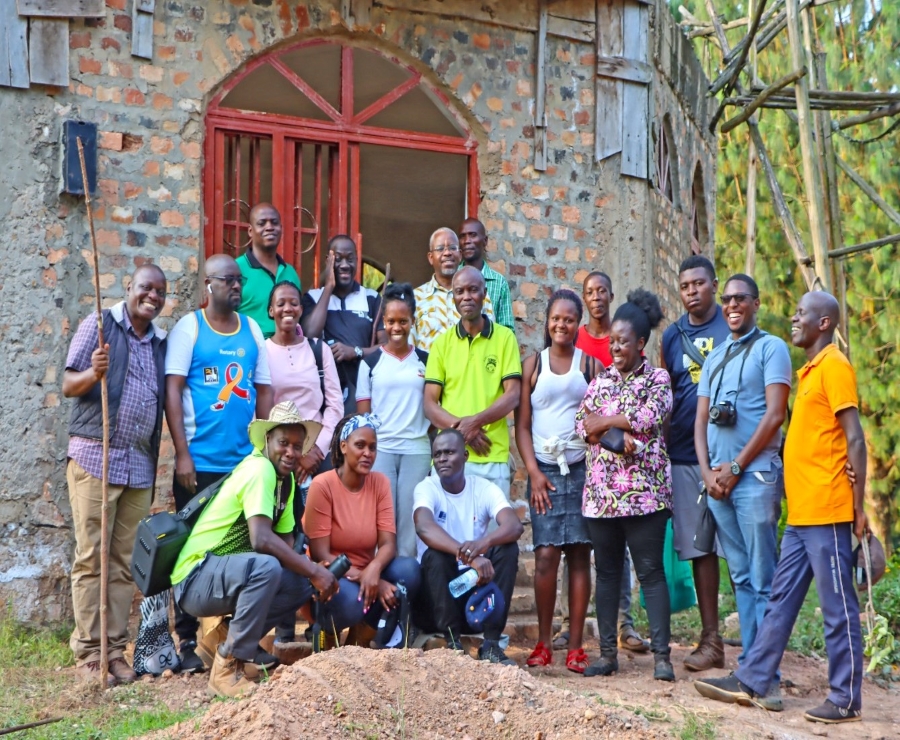
At St. James Nyakagyera C.O.U, they got out of the vehicle and the actual walk was about to begin. The church leader at the Nyakagyera church cordially welcomed them, tourists in the area, as he called them, and prayed for them in sonorous Rukiga after a short briefing about the places of special interest around Nyakagyera, especially the famous cave. The church in Nyakagyera has been present since 1923, and so they celebrated the centenary of its existence in August 2023. It was originally a grass-thatched church, and, today, is a modern, Victorian style plastered church building with a beautiful recreation green around it, plus a full-fledged primary school nearby that started in 1947. The Nyakagyera Church is a monument to the spiritual determination and resilience of the natives of this village that is nestled between the high hills of Kabaraga, Kyangabo, Nyamango and Kirengyere.
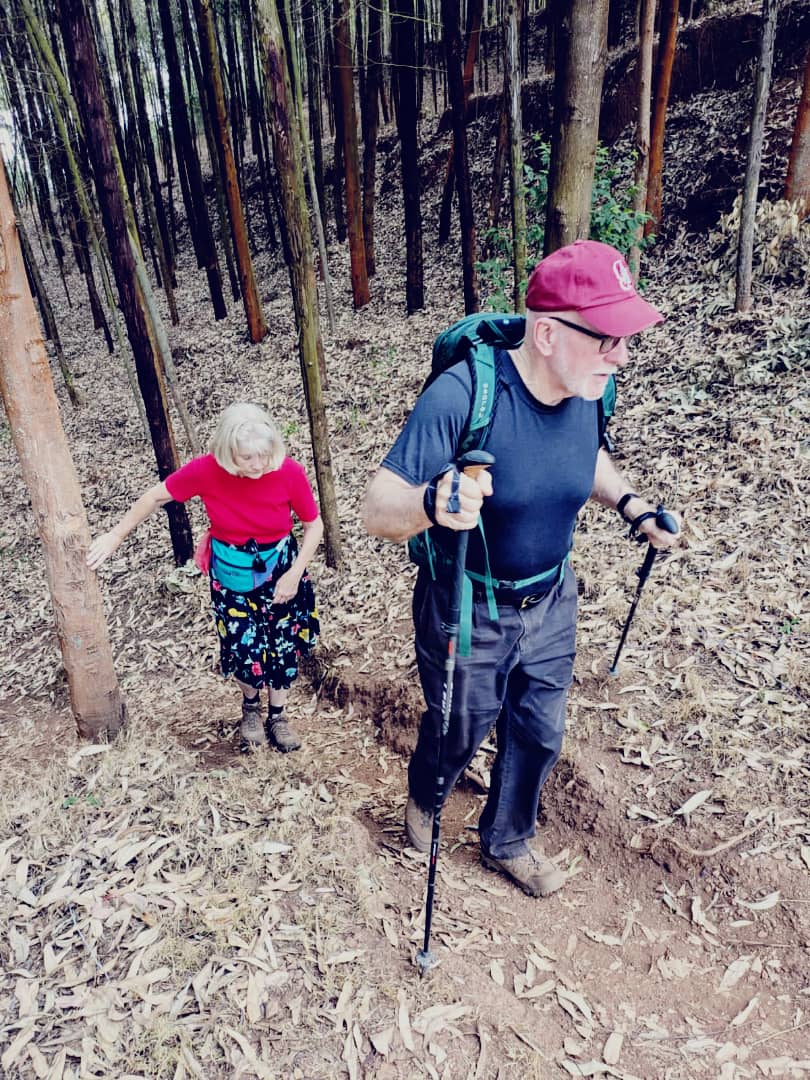
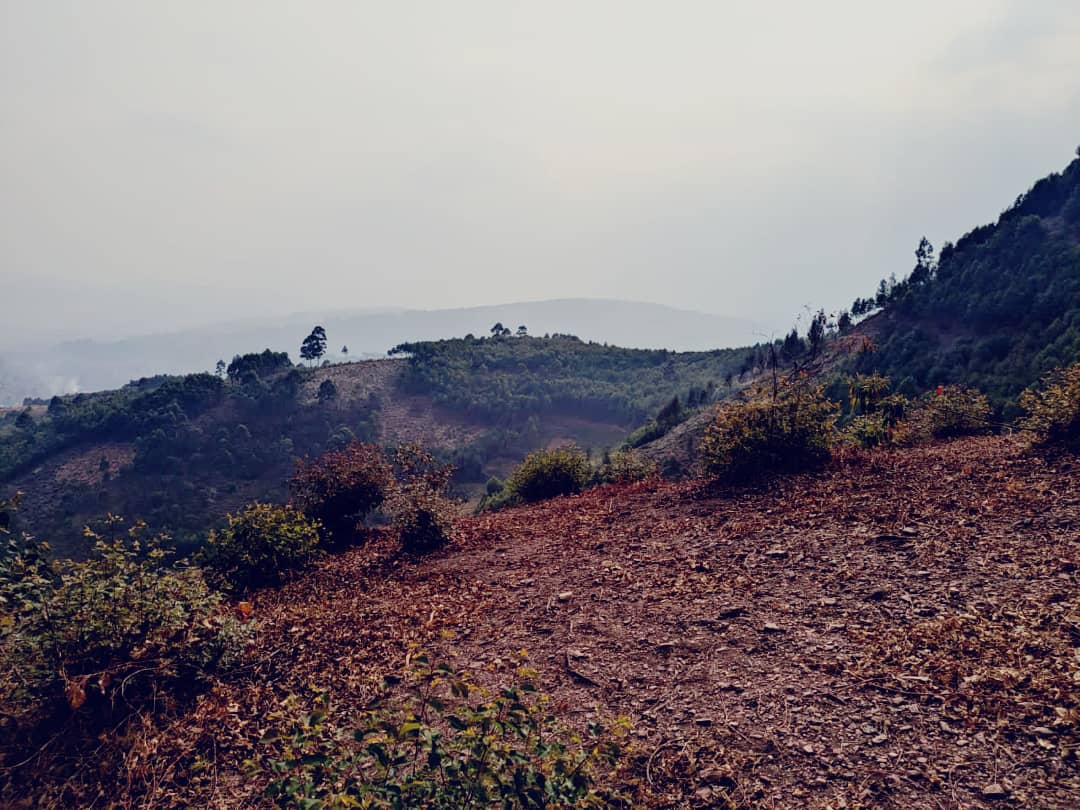
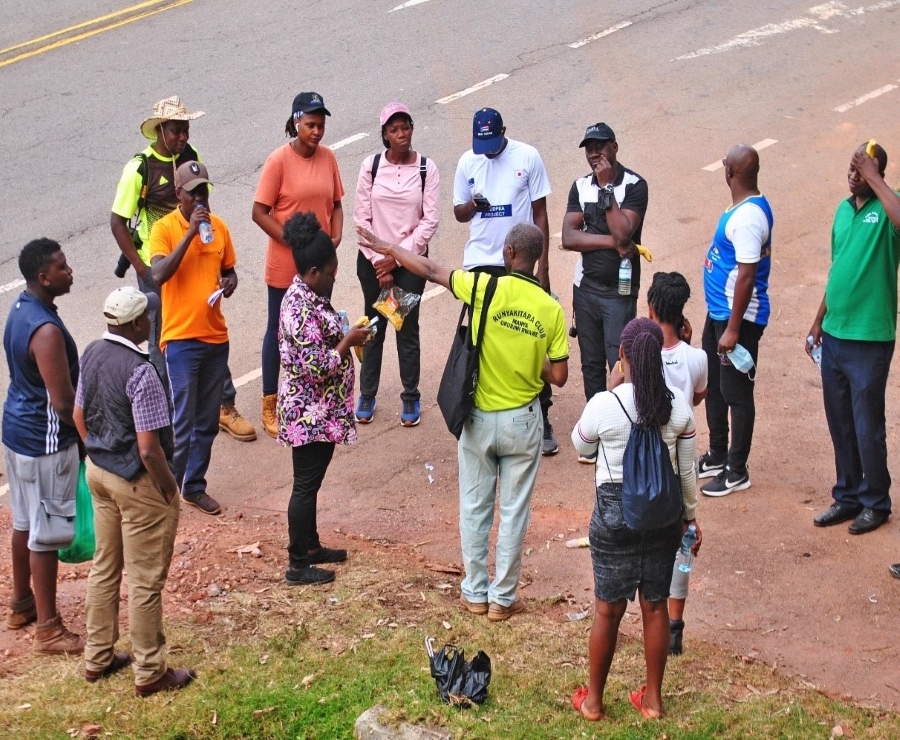
The walk against ethnocentrism began at exactly at 2:00 p.m. on the narrow footpaths of Mukaka, Kabaraga, Nyamango, Nyarungwe and Rwanza, to start with, which names Rev. Prof. Muranga, a researcher in names or onomastics, explained in terms of their possible origins. He as well narrated how the steep hills, never thought by locals as capable of accommodating a modern road like this Kabale-Mbarara highway, were cut between 1967 and 1969. The road was cut by an Israeli company through the rugged terrain and now connects districts, regions and countries. More onomastic “lectures” took place at the Nyamango ridge, which, as Prof. Muranga told the students, was part of the dialect boundary between what he called Rukiga proper and Rukiga-Ruhororo. This interesting explanation was a little later followed by a nearly spontaneous singing of the beautiful Kigezi anthem as him and students stood at a certain spot and, almost breathless, beheld the geographical beauty in front of and below them, with Mt. Muhabura looming faintly on the western horizon.
The students listened to the inspiring story of Rev. Canon Kosiya Kayogooza, a man of relatively low formal education, who nevertheless started four secondary schools in the Kigezi Diocese archdeaconeries he worked in as Archdeacon, namely Muko High School, Iryaruvumba High School, Kigata High School and Kamuronko High School. Kayogooza happened to have been the son of one Matembe, a young brother of Maguru, the grandfather of Rev. Muranga, both of them, plus one Ntimba and two sisters Kaanyenje and Kantunguru, children of one Busaasi, son of Mbahurira, son of Kiteeba, son of Mbaruka son of Kanyonyi and so on through 9 other generations whose earliest so far known ancestor, Rwihura I, Prof. Muranga estimates could have been born around the year 1458. Theirs is a lineage within the Bazigaaba sub-clan of the Ba-Mungwe clan among the Bakiga of southwestern Uganda, whose totem (“omuziro”) is “engabi”, or bushbuck, and whose “animal friend” (“enyamaishwa nywani yaabo”) is “engwe”, or the leopard. The Bazigaaba can also be found in Ankole, Rwanda and Burundi and other people groups whose totem is “engabi” are, for example, the Ababiito of among the Batooro and the Banyoro, the Ngabi clan among the Baganda and the Abalangira clan among the Basoga. The origin of this cross-ethnic sharing of a totem, which is not limited to the “engabi” people, needs to be researched into by historians and anthropologists.
Back to Matembe now, who Rev. Muranga estimates to have been born around 1880. He was apparently a controversial figure, for, said the Reverend, basing on a story his cousin Edward Tibeereba (83), an outstanding oral clan historian, told him, Matembe one day went to Bukinda to ask the relatives of his wife Seseriya to allow him take back his runaway wife who had suffered a lot under his home regime. Seseriya’s brothers, members of the Abainika sub-clan of the Ba-Muhutu clan, that night taunted Matembe with insults regarding his mistreatment of their sister. The following day as he and his returning wife came close to Nyakagyera, at a narrow pass called Aha Bwizi bw’Enkoko between Nyabitabo and Shooko villages, all of a sudden, Matembe who was still smarting from the humiliation and the pain of the hard words from his brothers-in-law, was seized with an almost murderous wave of anger and gave his wife a heavy slap on one of her cheeks, causing her to angrily throw down the basket of grain that her family had given her as a gift to return to her marital home with. She made an about-turn and walked with finality back to her people in Bukinda. Matembe, too, defiantly walked on to Nyakagyera, and that was the end of his marriage to Seseriya, who had been his second wife, junior to Kayogooza and his elder brother Danieli Kyabaaba’s mother, Yeyeeri Kainanika, a very dignified, highly respected, grey-haired old woman whom Rev. Muranga knew well during his childhood in the 1950s.
The students applauded the don for telling them that story, whose message was, as he pointed out, to inspire them to in future behave differently from Matembe. Man and woman are equal before God, and mutual love and respect is the foundation of a good marriage and, indeed, a happy society. This, he emphasized, was in line with the CILP (Campsite for Intercultural Learning and Prayer) motto: Galatians 3:28: “Therefore there is neither Jew nor Greek, neither slave nor free, neither male nor female, for you are all one in Christ Jesus.” CILP is the name of this initiative against ethnocentrism, male chauvinism, and socio-economic snobbery.
The walk steadily went on with vigour and stamina in exploring new paths around the green hills. The initial alienation among the students slowly died along the pathways. Students of different ethnic and cultural backgrounds now shared a camaraderie as one team and family and without any strings attached. They were beginning to bond with one another as brothers and sisters of one country, one world, one university; and their don was playing a role tantamount to that of an elder and a parent within society. At the foundation stone of the Campsite for Intercultural Learning and Prayer (CILP), the guide narrated the story that became the genesis of this initiative. He began by calling for silence and composure in the audience and then told of an experience of his in March 1981 when he was a young lecturer at Makerere University. He talked of his scholarship to study in West Germany and how he would not leave the country before visiting the place in Tooro to which his parents and younger siblings had migrated a year earlier, in January 1980, his father Ezera Muranga having been born in Nyakagyera village in 1908. On his way to that location in Tooro, at around 3 o’clock in the afternoon and broad daylight, three men confronted him brandishing sharp spears. It was the most frightening experience of his 29 years of life so far. After cross-examining him and getting satisfied that he was not a Mukonjo, the spear-wielding men allowed him to continue on his journey. But they told him: “Ekikukirize oli Mukiga!” This was Rutooro for “What has saved you is that you are a Mukiga”. It was a statement that he would never forget all his life. As he walked on, thankful that he was still alive, it dawned on him that the three men had been Batooro and they were hunting for Bakonjo. The Bakonjo too were apparently hunting for Batooro. This was what the so-called Rwenzururu movement in the Rwenzori region was about. Tears welled up in his eyes as he thought of the twenty-nine-year old Mukonjo who would have been killed by Batooro, leaving behind a beautiful wife and a son and surrendering his hopes for further studies and a useful academic career, simply because he happened to be a Mukonjo; he also imagined a Mutooro young man who would similarly have been killed by Bakonjo just because he was a Mutooro. This inter-ethnic hatred within our multicultural country was totally absurd, totally unacceptable.
Those tears were for his dear country, Uganda. He remembered a book of the title “Cry the beloved country” by a South African novelist called Alan Paton, which he and his Senior One class had read in 1967, in their English literature lessons at Ntare School in Mbarara. In 967 he had not understood the novel. But now he imagined that it could have been inspired by an experience similar in some ways to this in apartheid South Africa.
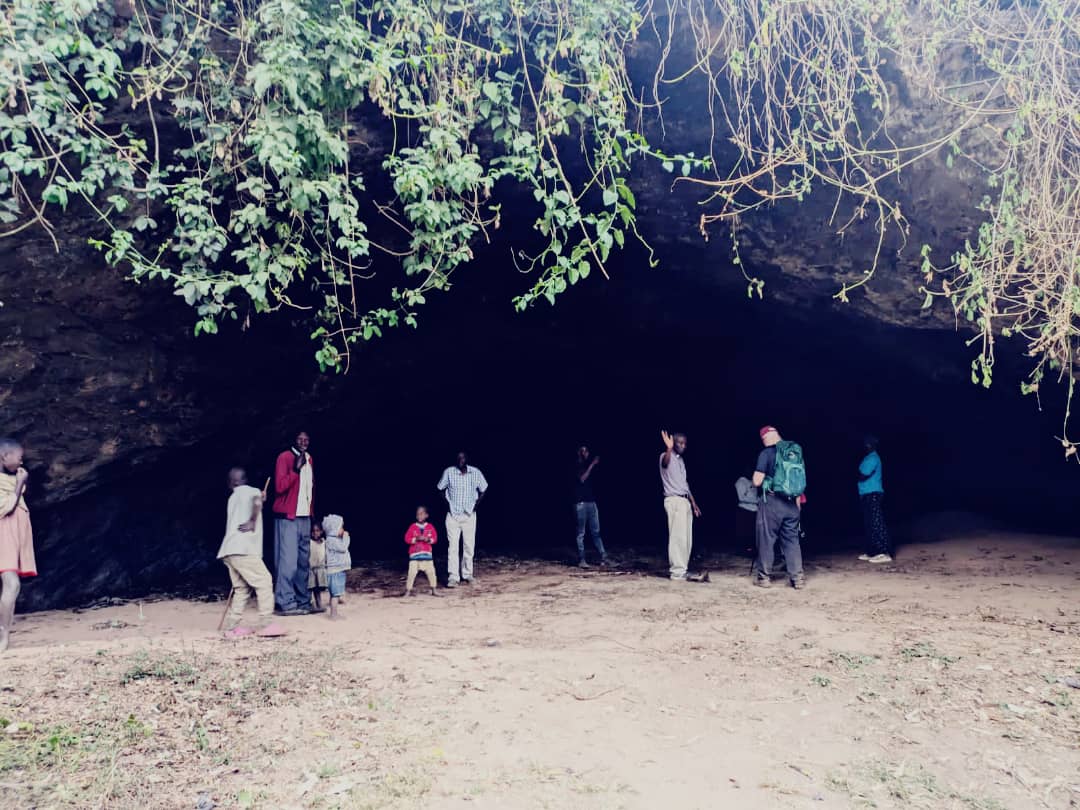
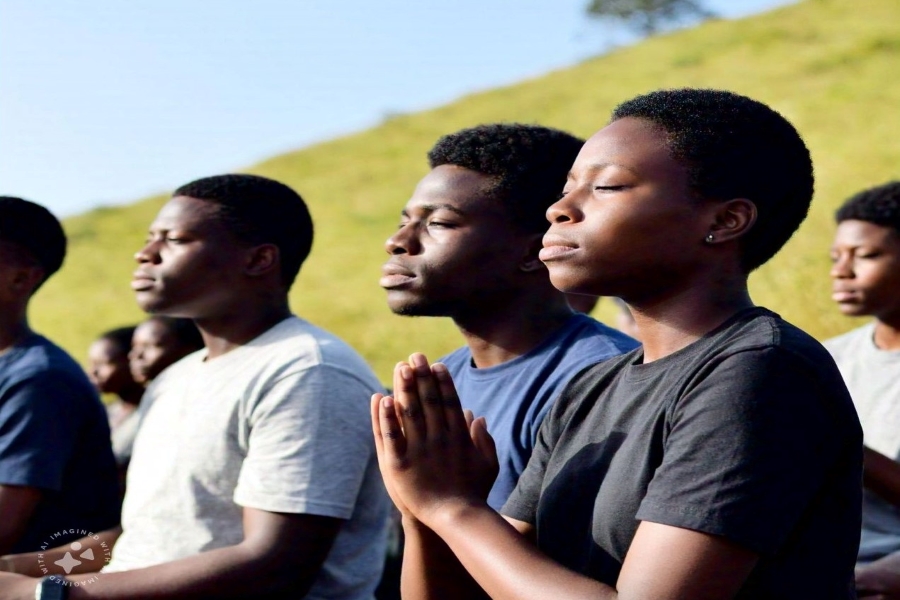
After this narration, he kept numb for a couple of minutes and asked the students to choose amongst themselves leaders of prayers in all the languages that were represented among the twenty students. Prayers in Rukonjo, Rutooro, Runyankore, Rukiga, Rufumbira and Swahili were said and the participants prayed for peace, unity and equal treatment of one another among members of the human race regardless of ethnicity, skin colour, education, economic status, and gender. Reverend Muranga concluded these solemn moments with a prayer in English and commended the students, as youths, to ask God for His guidance. The walk now resumed on a gentle slope from Rwakatoryo, the CILP hill, through the village towards the Nyakagyera Cave, a veritable geographical wonder, where our story begins from next time.
Ishimwe Jonan has also written “The Woman of Nyakambu”,”Utugaaniiro tw’Ingenzi”, other articles and poems. Contact him on +25685983658

